Drag Me to Cards with Courage: Queer Identity and Recovery ft. Claire Davis
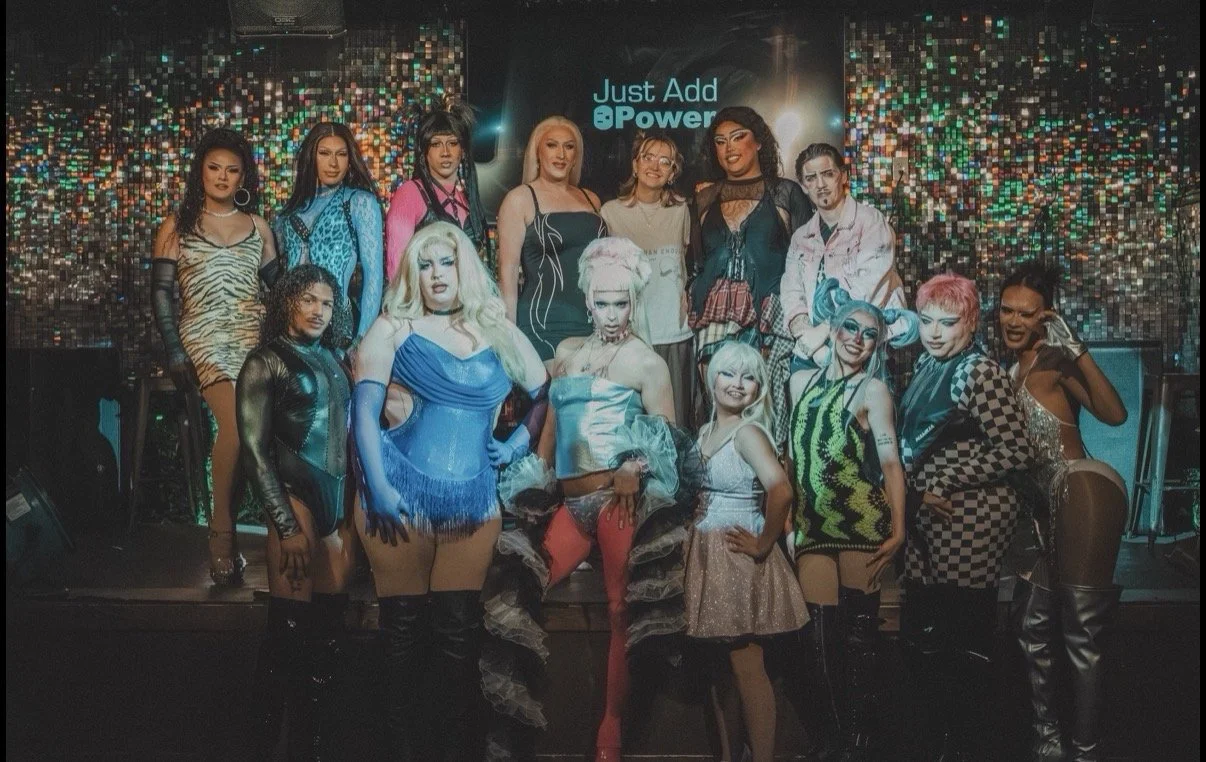
For Claire Davis, recovery has never existed in isolation from the rest of their identity. The people, spaces, and communities that have made them feel most like themselves have also played an important role in their recovery. That is what made Drag Me to Cards w/ Courage feel so natural: it brought together two communities that have deeply shaped their life, creating a space where eating disorder recovery and queer self-expression could exist side by side.
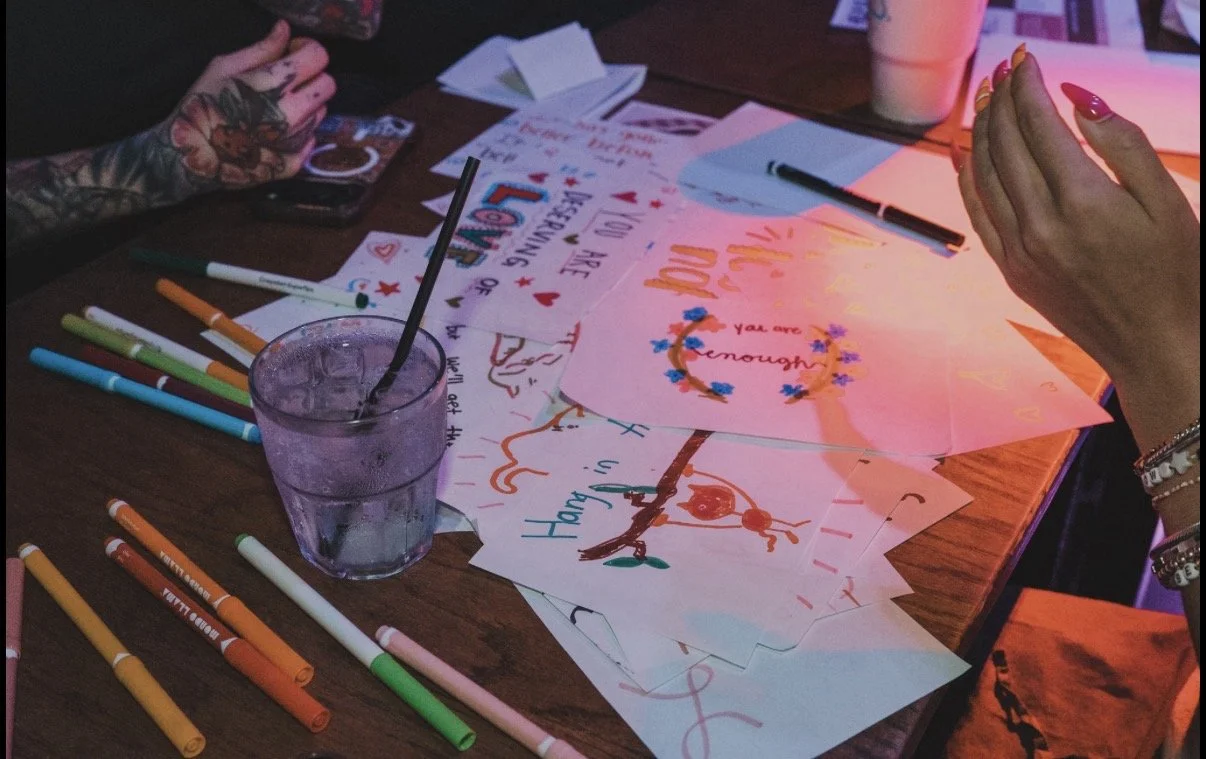
Hosted at Envy in downtown San Antonio, Drag Me to Cards w/ Courage brought together members of The RecoverED Project, community members, friends, and local drag performers for an evening centered around connection. The event began with Cards with Courage: TRP’s initiative that brings people together to create handwritten cards for individuals receiving eating disorder treatment. Attendees contributed $5 to participate, with the proceeds supporting The RecoverED Project, before the evening transitioned into a drag show featuring local performers.
Approximately 20–25 people participated in the card-making portion of the event, creating 67 cards to be distributed to individuals receiving eating disorder treatment. The drag show brought in an estimated 30–40 people.
But for Claire, the numbers were only one part of what made the event meaningful.
“The biggest thing was community,” they explained.
The idea for the event came from the overlap between two communities that have become especially important to Claire. The RecoverED Project gave them a recovery community, while the drag and queer performance scene gave them another place to find friendship, expression, and belonging. Bringing those communities together allowed Claire to introduce eating disorder recovery into a space that had already given them so much.
Claire had already developed relationships with many of the performers in the San Antonio area through their involvement in the local drag community. When they began reaching out with the idea for the event, those existing relationships helped make the vision possible. Much of the promotion happened through social media, with Claire and the performers using their own platforms to spread the word and bring their communities together.
What resulted was an atmosphere Claire described as full of “love and joy.” Friends, performers, community members, and supporters of the drag scene all came together in the same room. The event felt less like two separate activities placed next to each other and more like an intentional intersection of identity, recovery, self-expression, and community.
That intersection matters.
Eating disorder recovery is often discussed as though it exists separately from the other parts of someone's life. But for many LGBTQ+ individuals, identity, community, body image, and recovery can be deeply connected. Creating recovery spaces that acknowledge those intersections can make the difference between someone feeling like they are being asked to leave part of themselves at the door and feeling like they can show up as their whole self.
For Claire, creating that kind of space was especially meaningful given the political climate surrounding drag and LGBTQ+ communities in Texas. In San Antonio and across the state, drag performances and queer spaces have increasingly been pulled into public and political debates, creating an environment where LGBTQ+ expression can feel more scrutinized than celebrated. For Claire, incorporating drag into a recovery event was therefore an intentional choice to create something that pushed back against that fear.
“I wanted to show that it’s a safe place,” they explained.
That message felt particularly important in a place like San Antonio, where queer communities have continued to build spaces for connection and expression despite the broader political climate. Rather than allowing drag to be defined by controversy or fear, this event placed it in a space centered on generosity, recovery, friendship, and community.
For Claire, that was the point. Drag is a meaningful form of queer expression, and creating a room where people could participate without feeling like their identity or self-expression made them unwelcome was itself a form of advocacy. The event did not ask people to separate their queerness from their recovery. Instead, it made room for both.
In that sense, the political significance of the event was not necessarily in making a political statement. It was in creating the kind of space that LGBTQ+ communities deserve: one where people can show up as themselves, support one another, and experience joy without having to defend their right to be there.
Drag also created an opportunity to talk about identity and body image in a different way.
For Claire, recovery involves learning to express yourself and reconnect with the most authentic version of who you are. They reflected on how restriction can sometimes feel like an attempt to make yourself smaller, not only physically but emotionally and spiritually. For many LGBTQ+ people, experiences of discomfort with the body, identity, and expectations around how they are “supposed” to look or exist can become intertwined, and conversations about eating disorder development are often present within queer communities. Drag offers a powerful contrast to that idea. It can be loud, creative, expressive, exaggerated, and unapologetically visible.
You can take up space. You can experiment with how you express yourself. You can be seen. And you can be yourself.
For Claire, that is part of what makes drag such a meaningful connection to recovery. It demonstrates that there is no single way a person is supposed to look in order to express themselves, participate in a community, or deserve to be celebrated.
That idea extends beyond the stage.
Eating disorders do not belong to one body type, gender identity, sexuality, race, or appearance. Yet social expectations about how people are “supposed” to look can influence the way individuals experience their bodies and can make recovery more complicated. Claire specifically pointed to the stigma surrounding larger bodies and the importance of recognizing that people do not need to look a certain way to belong in queer spaces, drag spaces, or recovery spaces.
For some LGBTQ+ individuals, these pressures can intersect with gender dysphoria. Claire noted that transgender people in particular may face complicated experiences when navigating their bodies during recovery. Weight restoration and other physical changes can be difficult to navigate when someone is already experiencing discomfort or dysphoria surrounding their body.
There can also be another barrier that is less visible: the uncertainty of entering a recovery space and wondering whether your identity will actually be respected once you get there.
For someone who has experienced discrimination or exclusion, walking into a space where their identity is not represented can be intimidating. Recovery already requires vulnerability. Feeling as though you have to defend or explain who you are can make that vulnerability even heavier.
That is why representation matters.
Claire described Drag Me to Cards w/ Courage as a space where people could know that they were welcome. They did not have to look a particular way, identify a particular way, or fit a particular image of what someone in recovery is “supposed” to look like.
The event gave people a place to exist in the bodies they live in and with the identities they resonate with.
And for Claire, that sense of belonging is not separate from recovery. It is part of it.
“Community and connection has always been the biggest component of advancing my recovery,” they said.
Having people around you can create motivation, but Claire believes it can also help someone find their “why.” Recovery can feel frightening and uncertain, especially when someone feels isolated. Knowing that there are people who care about you, people who will show up for you, and spaces where you are genuinely included can give recovery a meaning beyond simply getting through the next day.
That belief was reflected in the event itself.
One of the moments Claire remembers most clearly happened toward the end of the drag show, when they were invited onstage to speak and introduce themselves in connection with The RecoverED Project. Looking out at the people who had come to support the event, Claire was able to see the community they had helped create in that room.
It was a reminder that the two communities they cared about did not have to remain separate. The recovery community could show up for the queer community. The queer community could show up for recovery. And both could create something bigger together.
Claire also sees drag as an important form of self-expression. Organizing the event allowed them to support performers they already cared about while creating an opportunity to share the joy and freedom that drag has brought into their own life.
In a political climate where queer expression can so often be discussed through fear, disagreement, or controversy, choosing joy is meaningful. So is creating a room where people can be unapologetically themselves.
Drag Me to Cards w/ Courage demonstrated that advocacy does not always have to look like a protest or a political campaign. Sometimes, advocacy looks like creating a space where someone can walk through the door and know they belong.
It can look like a drag performer taking the stage. It can look like friends showing up for one another. It can look like a recovery organization entering a queer community and saying: you belong here, too.
Most importantly, Drag Me to Cards w/ Courage showed what can happen when people are given the opportunity to bring different parts of themselves into the same room.
A recovery event does not have to look one particular way. It can involve handwritten cards, conversations with friends, a room full of people cheering for drag performers, or simply the feeling of knowing that you belong somewhere.
The event raised over $500 for The RecoverED Project and produced 67 cards for individuals receiving eating disorder treatment. But its impact extended beyond what could be counted.
It created a space where recovery could enter a queer community, where queer identity could be welcomed within a recovery setting, and where people could see that they did not have to choose between those parts of themselves.
And perhaps that is the heart of what Claire hopes people take away from the event: recovery is worth pursuing even when it feels frightening, and finding the people and communities that remind you why you want to recover can make the world feel a little less overwhelming.
Claire's biggest lesson from organizing the event was surprisingly simple: their community would show up.
They had been nervous beforehand. What if no one came? What if people did not care? What if the idea did not work the way they imagined?
But people came. Their community showed up. And in doing so, they reminded Claire that sometimes the negative things we believe about ourselves are not what the people around us see.
“You can doubt yourself, and you can have such negative views about yourself,” Claire reflected, “but at the end of the day, people really do love and care about you.”
That may be one of the most important connections between community and recovery: sometimes, other people can hold onto the belief that you belong before you are able to fully believe it yourself.
For anyone in the LGBTQ+ community struggling with an eating disorder, Claire wants them to know that recovery is worth it.
“Once you find your why, the world looks a lot less scary,” they said.
There is a place for you in this world. No matter what you look like. No matter how you identify. No matter how you express yourself. And no matter where you are in recovery.
There is a place for you.
Event & Photo Credits
Drag Me to Cards w/ Courage was organized by Claire Davis and hosted at Envy in downtown San Antonio.
Follow Claire on Instagram at @claire.pepperr.
Photos by Jarvis Garcia (@boxspeed400).
Special thanks to Pride210, a San Antonio nonprofit organization supporting the local LGBTQ+ community, and Kristi Waters, who hosted the event, alongside the drag performers, community members, friends, and supporters who helped make the evening possible.
Claire Davis has given The RecoverED Project permission to use their name, Instagram, direct quotes, and photographs from the event.
